
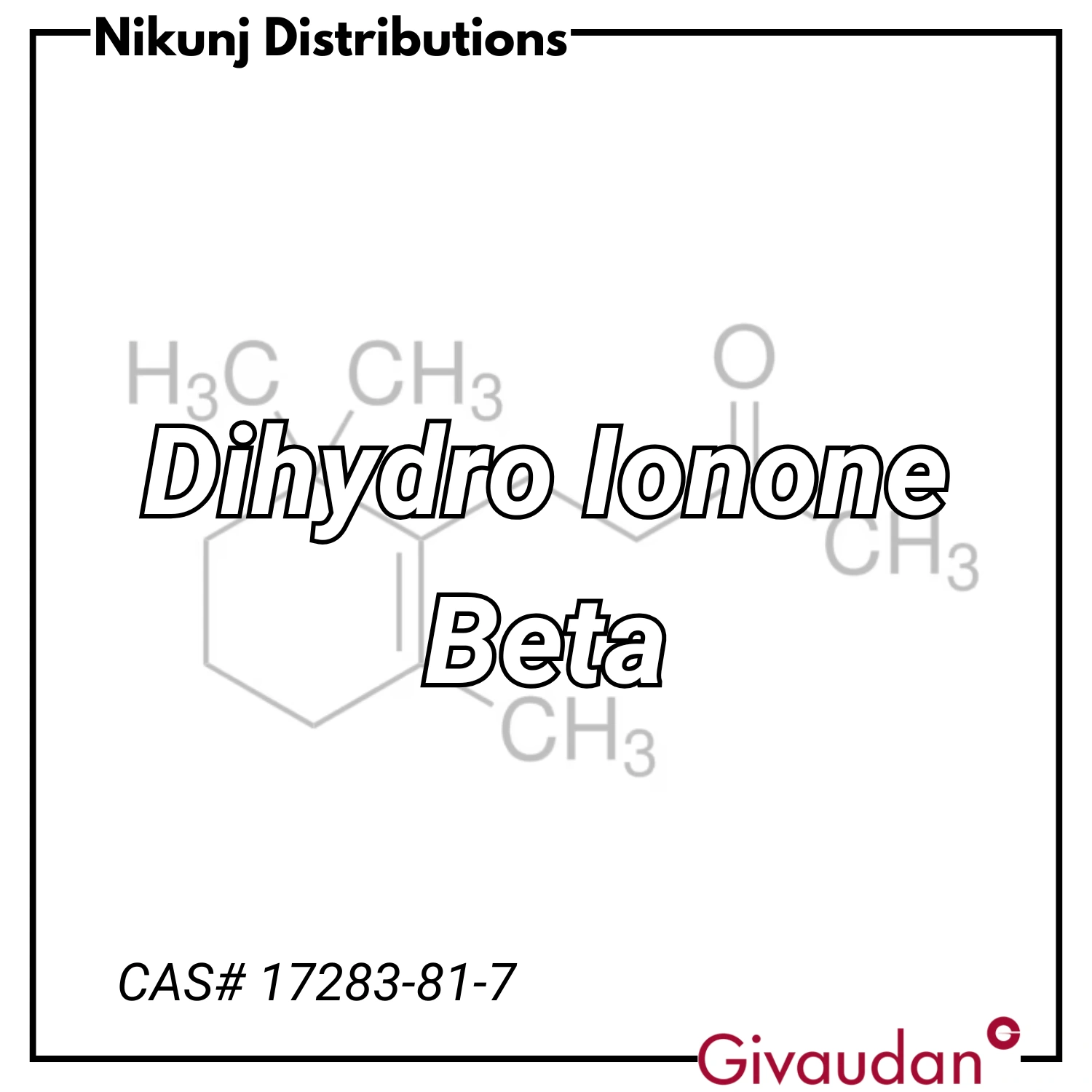
Dihydro Ionone Beta – Elegant Woody Floral Aroma Chemical
Introduction
Dihydro Ionone Beta is a premium aroma chemical widely used in the fragrance and flavor industry to create refined woody-floral accords. Belonging to the ionone family of aroma compounds, this ingredient delivers a distinctive blend of violet-like floral tones, soft woody nuances, and a delicate ambery warmth. These characteristics make it an essential component in modern perfumery, cosmetic formulations, and personal care products.
This versatile fragrance material is known for its smooth diffusion, balanced intensity, and excellent stability in various formulations. Perfumers appreciate its ability to enhance floral bouquets while adding sophistication and depth to woody compositions. Its elegant scent profile makes it suitable for fine fragrances, soaps, detergents, lotions, and even flavor applications.
Naturally related molecules occur in plants such as rose, boronia flowers, and juniper needles, contributing to their characteristic aroma. However, the ingredient used in perfumery is typically synthesized to achieve consistent purity and performance.
Appearance, Physical State, and Key Properties
Understanding the technical characteristics of this aroma compound helps manufacturers integrate it effectively into fragrance formulations.
-
Appearance: Clear to pale yellow liquid
-
Physical state: Liquid aroma chemical
-
Odor profile: Woody, floral, orris-like with slight fruity and ambery nuances
-
CAS number: 17283-81-7
-
Molecular formula: C13H22O
-
Molecular weight: ~194.31 g/mol
-
Density: Around 0.92–0.93 g/cm³
-
Boiling point: Approximately 250–262 °C
-
Refractive index: ~1.479–1.484
-
Odor strength: Medium intensity
-
Stability: High stability in various formulations
These physical and chemical characteristics make it suitable for use across a wide range of fragrance and flavor applications while maintaining consistent performance and longevity.
Olfactory Profile and Fragrance Character
The scent of Dihydro Ionone Beta is admired for its balanced and elegant aromatic profile. It combines the soft floral sweetness of violet with woody undertones and a gentle ambery warmth.
This fragrance molecule is particularly valued for the smooth orris-like depth it brings to perfume compositions. It blends seamlessly with floral ingredients such as rose, iris, and osmanthus while reinforcing woody accords with subtle sophistication.
Its olfactory character can be described as:
-
Floral and violet-like
-
Soft woody and slightly ambery
-
Lightly fruity with berry-like nuances
-
Smooth, elegant, and refined
Because of these attributes, perfumers frequently use it to build complex fragrance structures that feel both modern and timeless.
Applications in Fragrance and Flavor Industry
One of the main reasons for the popularity of this ingredient is its versatility. It performs well in a wide variety of consumer products and fragrance categories.
Common applications include:
-
Fine fragrances and luxury perfumes
-
Cosmetic products such as lotions and creams
-
Personal care products including shampoos and body washes
-
Soap and detergent formulations
-
Fabric softeners and household cleaners
-
Flavor compositions for certain food and beverage products
Its ability to stabilize fragrance blends while providing long-lasting scent diffusion makes it highly valued by fragrance formulators.
Performance in Perfumery Formulations
In perfumery, this aroma chemical is often used as a heart-note component that connects floral and woody structures within a fragrance composition. It adds richness and volume when combined with floral ingredients and enhances the smoothness of woody bases.
Perfumers frequently incorporate it into accords such as:
-
Violet and iris accords
-
Floral bouquets
-
Woody-amber compositions
-
Osmanthus reconstructions
-
Chypre and oriental fragrances
The compound is also appreciated for its good substantivity on skin and fabrics, meaning the scent persists longer and contributes to the overall longevity of a fragrance.
Stability and Compatibility
Another reason why Dihydro Ionone Beta is widely used is its strong chemical stability. It performs well across different product environments, including soaps, detergents, and personal care formulations.
The compound maintains its aroma integrity even in challenging formulation conditions such as high pH systems or detergent bases. This makes it suitable for industrial fragrance applications including cleaning products and fabric softeners.
Because of its compatibility with numerous fragrance ingredients, it blends effectively with floral, woody, fruity, and amber notes, helping perfumers create balanced and harmonious scent compositions.
Conclusion
In the world of modern fragrance chemistry, Dihydro Ionone Beta stands out as a refined and versatile aroma ingredient. Its elegant combination of woody, floral, and slightly fruity notes provides depth and sophistication to perfume compositions while maintaining excellent stability and performance.
From luxury perfumes to everyday personal care products, this fragrance material plays a vital role in shaping complex scent profiles that appeal to consumers worldwide. Its ability to enhance floral accords, support woody structures, and deliver smooth diffusion makes it an indispensable ingredient in contemporary fragrance formulation.
Reviews
There are no reviews yet.